How to tailor your resume to a job description
Updated ·3 min read
A tailored resume shows a hiring manager that you're a fit for this job, not just a job. It also helps you get found: recruiters search their applicant tracking system for the skills and titles in the posting, and a generic resume misses many of them.
Tailoring doesn't mean rewriting from scratch. With a solid base resume, it takes about 15 minutes.
Start with a strong base resume
Tailoring works best when you have a complete master resume: every relevant job, with more bullets than you'd ever send, and a full list of skills. Each tailored version is then a matter of choosing, reordering and adjusting, rather than writing new material under deadline.
If you apply to a few different kinds of role, keep a version for each (for example "data analyst" and "business analyst") and tailor from the closest one.
Step 1: Read the posting for what matters
Read the whole posting once, then go back and mark:
- The job title, exactly as written
- Hard skills and tools (software, languages, methods, certifications)
- Responsibilities that appear first or repeat; they're usually the core of the job
- Requirements vs nice to haves: "required", "must have" and "minimum" matter most
- Numbers: years of experience, team sizes, budgets
Step 2: Compare it with your resume
Go through your marked list and sort each item:
- You have it, and it's on your resume in the same words. Good.
- You have it, but it's missing or worded differently. This is where tailoring pays off: add it, in the posting's words.
- You don't have it. Leave it off. Lead with your strongest related experience instead.
Sembis does this comparison for you: paste a job posting and it scores how well your resume matches and lists the posting's keywords that are missing from it.
Step 3: Adjust your title and summary
Your headline and summary are the first thing read, so align them first. Use the posting's job title if it honestly describes you, and lead with the strength the posting cares about most.
Weak
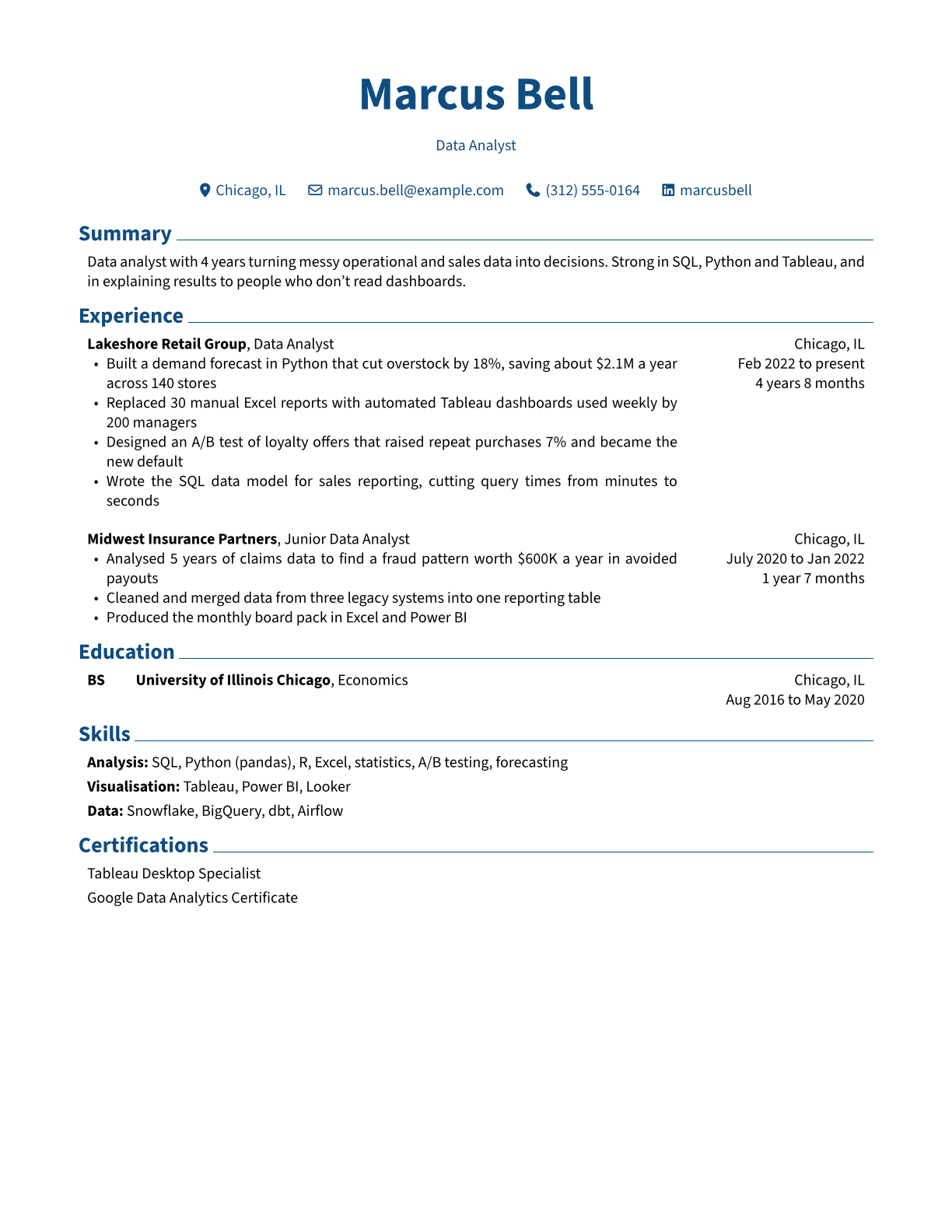
Data analyst with 4 years of experience in retail analytics.
Strong
Data analyst with 4 years in retail, specialising in demand forecasting and Tableau dashboards used by 200 store managers. (For a posting focused on forecasting and Tableau.)
Step 4: Reorder and rewrite your bullets
Within each job, move the bullets that match the posting to the top. Swap less relevant bullets for relevant ones from your master resume. Then adjust the wording so your experience is described in the employer's terms.
Weak
Built reports for the sales team.
Strong
Built automated Power BI reports on pipeline and forecast accuracy for a 40 person sales team. (For a posting asking for Power BI and sales forecasting.)
Only rewrite what's true. Tailoring is choosing and describing your real experience in the language of the job, not claiming experience you don't have.
Step 5: Update your skills section
Make sure every required skill you genuinely have is in your skills section, using the posting's spelling and wording ("Microsoft Excel" or "Excel", "CRM" or "Salesforce"). Move the most relevant groups to the top, and trim skills that have nothing to do with this job.
What not to do
- Don't copy the posting word for word into your resume. It reads badly and experienced recruiters notice.
- Don't hide keywords in white text or tiny fonts. It shows up the moment the text is extracted.
- Don't list skills you can't discuss. If it's on your resume, it's fair game in the interview.
- Don't forget the cover letter. If you write one, it should match the same priorities.
Step 6: Check it before you send
Read the tailored version from top to bottom as the hiring manager would. Does the first third of the page answer the posting's top three requirements? Then run the file through the free ATS resume checker to make sure it's read cleanly, and save it with a clear file name.
Frequently asked questions
Should I tailor my resume for every job?
For every job you really want, yes. At minimum, adjust the summary, the order of your bullets and your skills section to match the posting.
How many keywords should I include?
There's no magic number. Include every important skill and requirement from the posting that's genuinely true for you, in the posting's own words, where it fits naturally.
Is tailoring a resume the same as lying?
No. Tailoring is choosing which true experience to highlight and describing it in the employer's terms. Adding skills or results you don't have is lying, and it tends to come out in interviews.