Resume format: which one to use and how to lay it out
Updated ·3 min read
Format decides how quickly a reader finds what they're looking for, and whether software reads your resume correctly. The good news is that the best format for most people is also the simplest one.
The three resume formats
| Format | How it's organised | Best for |
|---|---|---|
| Reverse chronological | Work history first, most recent job at the top | Almost everyone, especially with a steady work history in the same field |
| Combination (hybrid) | A short skills or highlights section, then work history in reverse order | Career changers and people whose most relevant skills aren't in their latest job |
| Functional | Skills grouped by theme, with little or no job history detail | Rarely a good idea: recruiters often read it as hiding something |
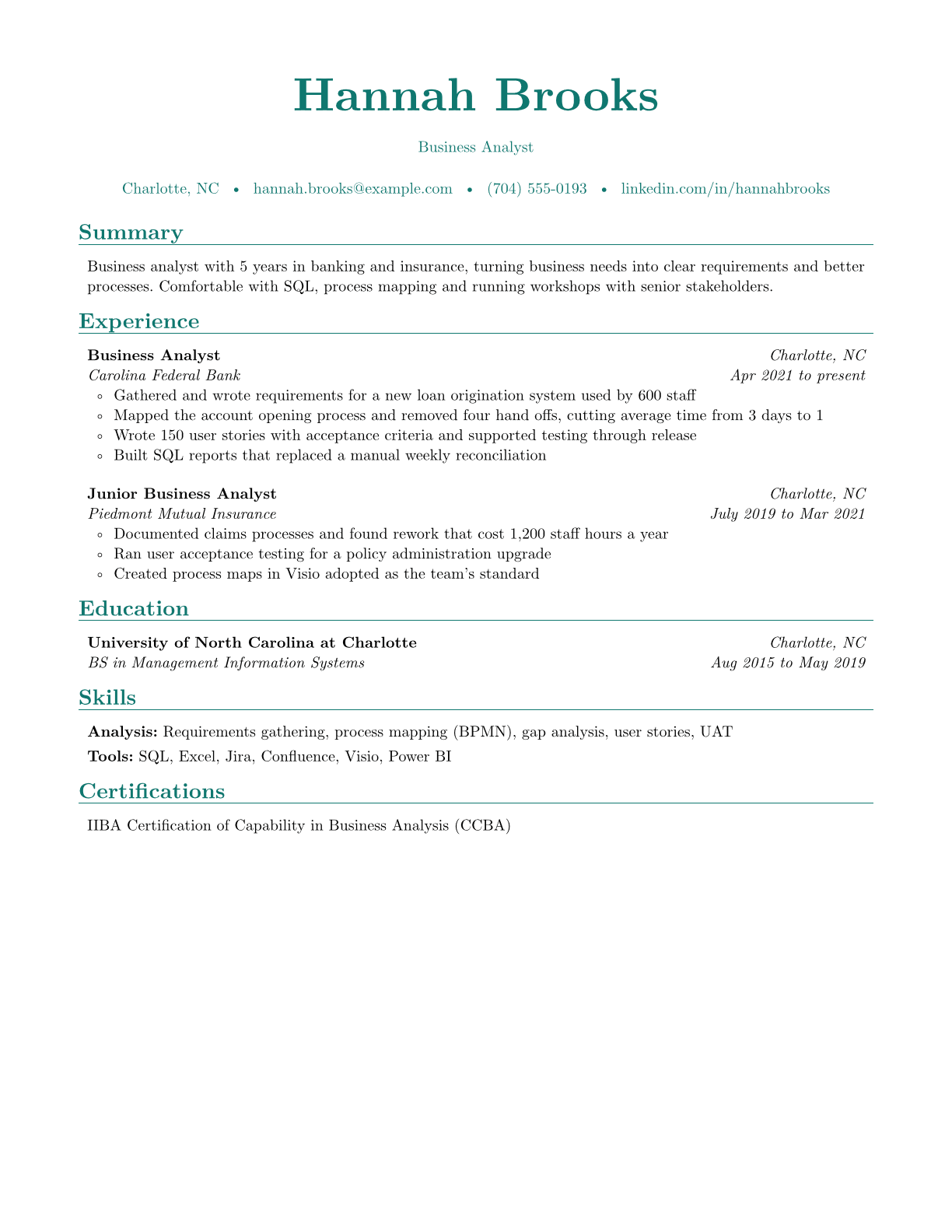
Use reverse chronological unless you have a clear reason not to. It's what recruiters expect, it answers their first question (what are you doing now?) immediately, and it's the format tracking systems parse best because each job has a title, employer and dates in a predictable place.
If you're changing careers, the combination format lets you lead with transferable skills while still showing an honest work history. Avoid a purely functional resume: without dates and employers, a reader can't tell where your skills came from.
Which order to put sections in
Put your strongest evidence first. The order depends on where you are:
| If you are | Section order |
|---|---|
| Experienced (2+ years) | Summary, Experience, Education, Skills, Certifications |
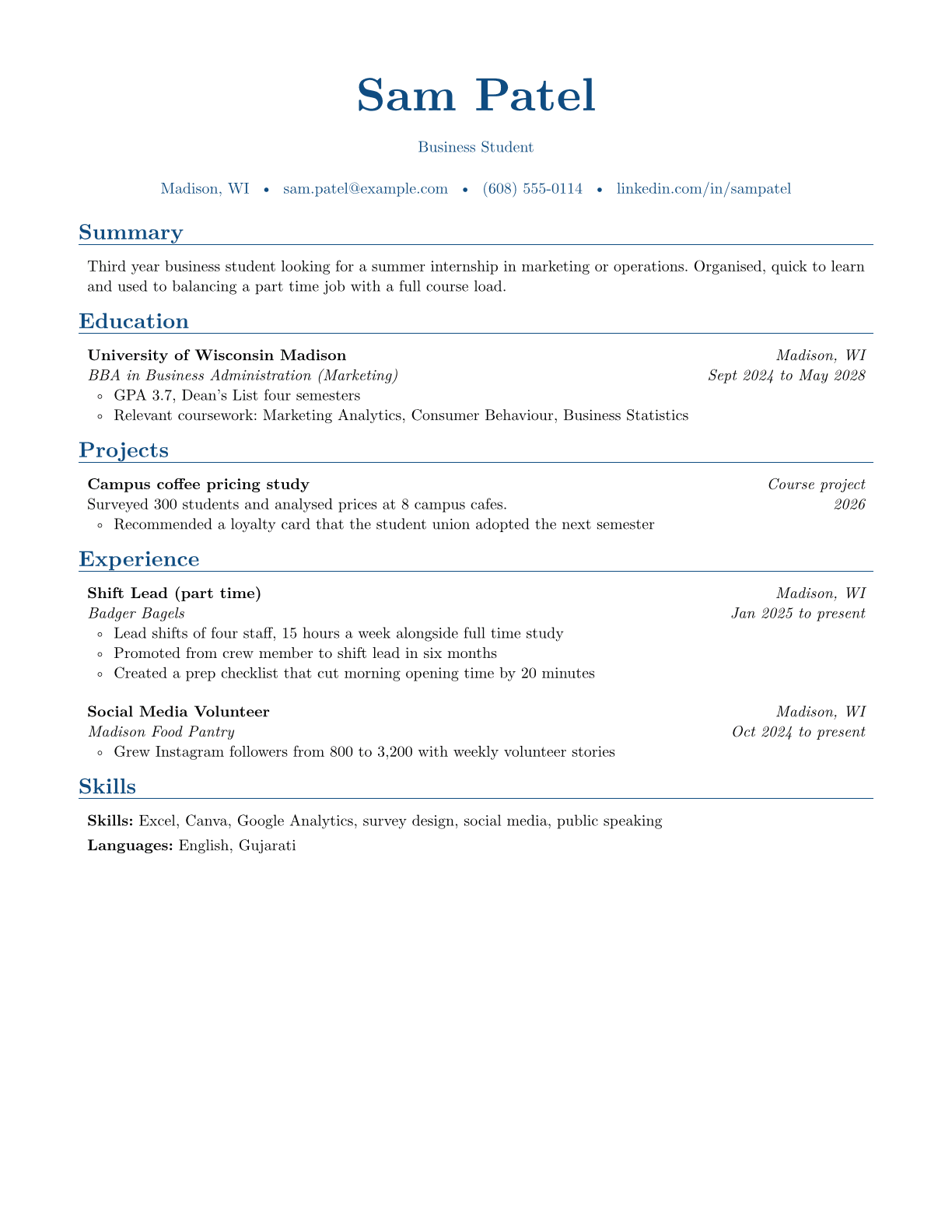
| A student or recent graduate | Summary, Education, Projects, Experience, Skills |
| Changing careers | Summary, Key skills, Experience, Education, Training |
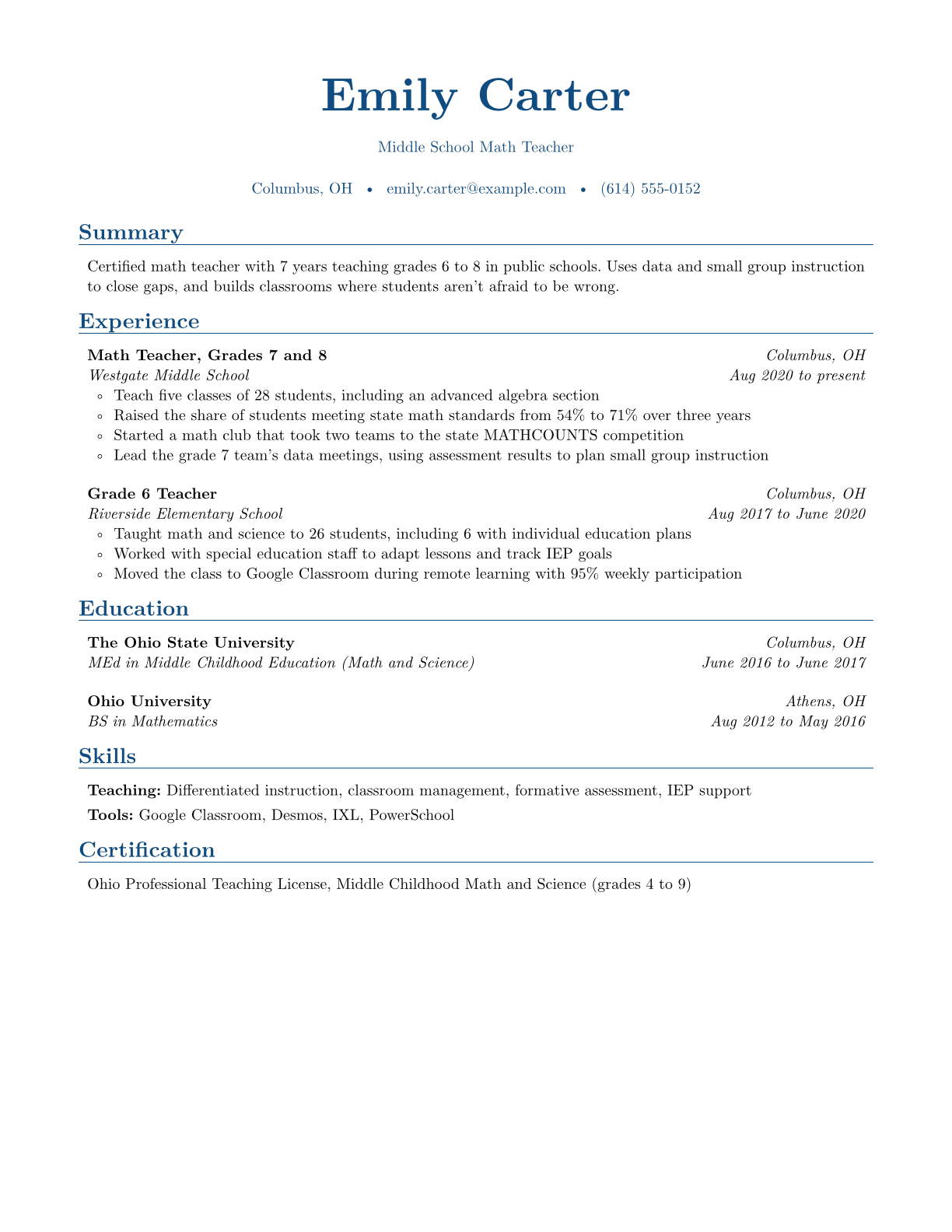
| In a licensed field (nursing, teaching) | Summary, Licenses and certifications, Experience, Education, Skills |
Whatever the order, use the standard names for each section. "Experience" and "Education" are recognised instantly by readers and parsers alike; creative alternatives aren't.
Layout: length, fonts, margins and spacing
- Length: one page for under about ten years of experience; two pages for senior roles. Never leave a second page mostly empty.
- Columns: one. Two column layouts often scramble when parsed.
- Fonts: a clean serif or sans serif font such as Calibri, Arial, Georgia, Garamond, Lato or Source Sans, at 10 to 12 points for body text. Your name can be larger.
- Margins: about 0.5 to 1 inch (1.25 to 2.5 cm).
- Spacing: enough white space between sections that each one is easy to find. Crowding is harder to read than a slightly shorter resume.
- Dates: the same format everywhere (for example "Mar 2022 to present"), aligned in the same place.
- Bullets: three to five per recent role, one or two lines each.
- Colour: one accent colour is fine. Keep body text black or near black for contrast.
PDF or Word file?
A text based PDF keeps your layout exactly as designed on every device, and current applicant tracking systems read it well. A Word document (.docx) is also widely accepted and is sometimes requested by recruiters who want to edit it. Follow the application's instructions; when there are none, send a PDF.
Name the file clearly: firstname-lastname-resume.pdf. "Resume_final_v3.pdf" doesn't help anyone.
Resume or CV?
In the US and Canada, a resume is a one or two page summary for most jobs, and a CV (curriculum vitae) is a longer academic record used in research and higher education. In the UK, Ireland, Australia and much of Europe and the Middle East, "CV" is the everyday word for what Americans call a resume.
Local norms differ in the details too. Some countries expect a photo, date of birth or nationality on a CV; the US, UK and Canada generally don't. When applying abroad, follow the conventions of the country where the job is.
Start from a format that's already right
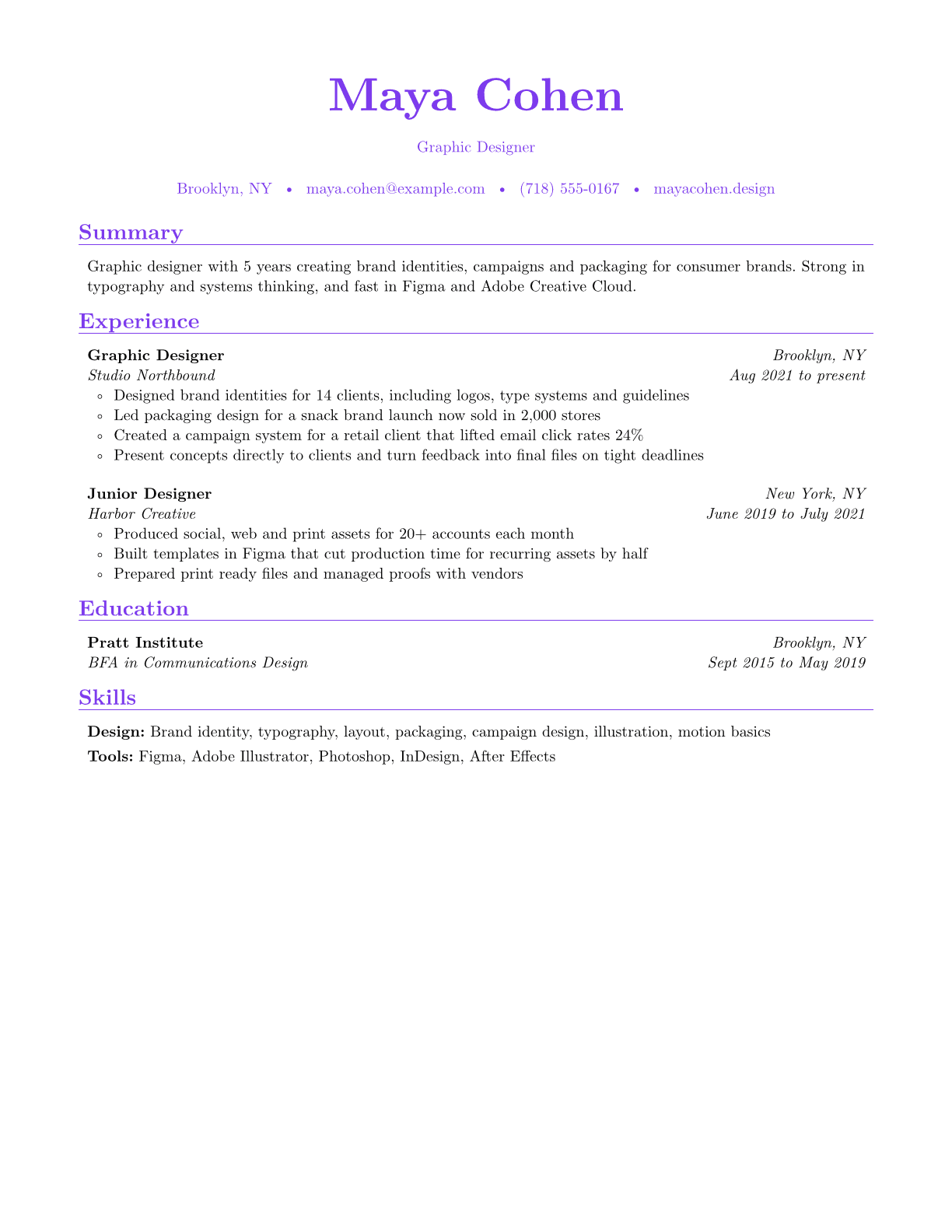
The fastest way to get the format right is to start from a template built for it. All Sembis resume templates use a single column, standard headings, consistent dates and a text based PDF, so the only thing left to get right is what you say. For a model of the words as well, see the resume examples.
Frequently asked questions
What is the best resume format in 2026?
The reverse chronological format in a single column layout. It's what recruiters expect and what applicant tracking systems parse most reliably.
Is a functional resume a good idea?
Usually not. Many recruiters distrust it because it hides where and when you used your skills. A combination format is a better choice if you're changing careers.
What font size should a resume be?
10 to 12 points for body text, depending on the font. Headings and your name can be larger.